
Shoot For Eggs Money Guide: Make Cash and Spend It on Progression
Make cash in Shoot For Eggs with the shoot-hatch-place-collect animal loop, selling low earners, and spend it on guns, training, plot space and rebirth.
How to make cash in Shoot For Eggs
Cash comes from the animals standing on your plot. The game's own How to Play text lays out the core loop: shoot eggs across the map to crack them open, hatch them into animals, place them on your plot, and collect cash from every animal you own. Selling animals you don't want is the second cash action. Every major purchase — better guns, damage training, plot space, rebirth — feeds back into that same loop by making it faster or bigger. This guide walks the earning loop step by step, shows what animals were observed earning, and maps each spending path to the income it buys.
The animal-and-plot loop, step by step
The only prerequisite is a gun, and the gun shop hands you a free UZI machine gun early on. From there:
- Shoot an egg. Eggs spawn around the map with their own HP pool. Shoot until one cracks, and the freed egg follows you. Tougher eggs need stronger guns — more on that under spending below.
- Carry it home and place it quickly. An egg you leave sitting in the field disappears after a time limit. One recorded session permanently lost an 80,000-HP Space Egg exactly this way, so walk it straight back to your plot and place it.
- Wait out the hatch timer. Every placed egg shows one. Observed hatch times run from about 3 seconds for the tutorial egg and 40 seconds for an Epic Egg to minutes for rarer eggs — roughly 11, 6, and 2 minutes were seen for Space, Devil, and Pat eggs, and one Strawberry Egg showed about 19 minutes.
- Collect the cash. The hatched animal stays on the plot generating money continuously, with its income shown on a label. Walk back and pick up what has accumulated before heading out again — in the recorded sessions the player collected at the plot between runs.
- Repeat. New eggs keep spawning, so the route starts over immediately; one player processed dozens of eggs in a single sitting, swapping cheap animals out for better ones along the way.
A run is complete when an animal is standing on your plot with a cash label over it. For the hatching side in more depth, see the animal hatching guide.
What animals were observed earning
Income varies enormously from animal to animal — junk pulls earn almost nothing, while rare ones can dwarf them. The labels below were observed in a recorded session; all figures in this guide come from auto-transcribed gameplay commentary, so treat them as indicative and recheck them against current in-game labels:
| Animal | Observed income |
|---|---|
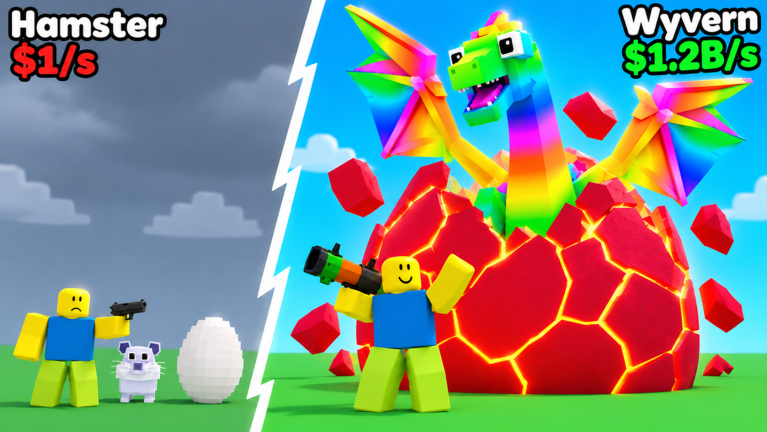
| Hamster | $1 per second |
| Crab | $1 |
| Snail | $1 |
| Pigeon | $2 |
| Frog | $3 |
| Bat | $3 per second |
| Kangaroo | ~$17 (figure unclear in the audio) |
| Caloridos (from an Epic Egg) | $156 |
At the bottom of the range, a lizard showed $0, and cheap pulls like bunnies were unequipped or sold on sight. At the top end, the biggest earners in the sessions were a gold-mutation animal, a Secret-rarity Kraken hatched from a Devil Egg, and dragons from Strawberry Eggs — in a second recorded session, a dragon was named the biggest money-maker on the base, with a gain of about 200k mentioned. Rarer eggs, mutations and animals are where the money scales, so it pays to learn the egg rarity, animal mutations and animals systems.
Selling low earners: the second cash action
When a hatch produces a dud, selling turns it into balance and frees a plot slot for a better egg. In the recorded session, the player sold a lizard, a horse, the Caloridos and a bat, and his balance stood at about $3 million right after the clear-out — enough to buy a Plasma Gun and attempt rebirth. The same pruning logic repeats later, when he removed everything earning under about $50 to make room for stronger animals. This page counts selling only as a cash source and a slot-management tool; the exact selling interactions and sellable-item rules are a separate selling topic.
Where cash goes: spending paths that grow income
The gun ladder
Better guns crack bigger, higher-HP eggs, which hatch rarer, higher-earning animals — the most direct income-growth purchase. Observed cash prices:
| Gun | Observed price (cash) | Note |
|---|---|---|
| UZI machine gun | Free | Offered early at the gun shop |
| Slingshot | ~$2,000 | |
| Flintlock | $3,000 | |
| MP5 | ~$2,000 (unclear) | Garbled audio in the source video |
| Crossbow | $18,000 | |
| M16 | $27,000 | |
| P90, AK-47, Blaster | not captured | Blaster was bought, price not stated |
| Plasma Gun, Lever Action Rifle | not captured | Bought after a first rebirth |
| Flamethrower, Sniper, Grenade Launcher, Minigun | not captured | Post-rebirth tier |
| RPG (mythic tier) | $5,000,000 | Requires rebirth; strongest gun observed |
The payoff is speed as well as reach: after buying the RPG, the player one-shot eggs across the whole map, cutting each loop dramatically short. Note that the deepest tier is rebirth-gated rather than merely expensive — the Plasma Gun and Lever Action Rifle only became purchasable after a first rebirth, and the RPG explicitly requires it. Gun-by-gun detail lives on the weapons and locked guns pages.
Damage training
The "Get Your Target" purchase unlocks the training target, letting you grow fire power on the DamageAuto pad, and the game's own text says upgrading your target unlocks bigger pads — it presents this step ahead of the pistol-to-RPG gun climb. Damage is what decides which eggs you can crack at all: later sessions ran into eggs with 9 billion and 1.8 billion HP that weaker guns simply could not break. Training therefore raises your income ceiling before you spend a single dollar on animals. The damage guide covers this system in full.
Plot space
Every animal you can place is a parallel income stream, so when the base filled up, the player bought a space upgrade instead of skipping eggs, then culled his sub-$50 animals to fit the new ones. What plot upgrades cost and how placement works are covered on the plot guide.
Rebirth
The official text describes rebirth as multiplying everything and reaching the locked guns. In the recorded session it became relevant around a $3 million balance: after rebirthing, the player immediately bought the Plasma Gun and Lever Action Rifle, and he rebirthed a second time on purpose because money then "generates fast" — that round of income funded the $5,000,000 RPG. What rebirth costs, when exactly it unlocks, and what it resets were not shown, and a temporary glitch once blocked the button before it worked, so budget for it loosely. For what sits behind the gate, see locked guns and weapon progression.
Robux purchases are a separate economy
VIP (R$79) and 2x Damage (R$99) game passes, plus developer products such as training-damage multipliers, Instant Hatch and an "x2 Offline Earnings" boost, are real-money purchases — not in-game cash sinks. The offline-earnings product's name implies animals keep earning while you're away, but the recorded sessions never demonstrate the underlying mechanic, so treat offline income as unconfirmed rather than planned around.
Values that change with updates
Every number above — animal income, gun prices, hatch timers, the ~$3 million rebirth moment — comes from gameplay commentary and can be mis-heard or outdated after a patch, so recheck prices and timers on current in-game labels before big purchases. One open question worth knowing: animals can show a "Feed Me" prompt, but the recorded sessions never located food or showed feeding changing income, so don't budget for it. Check the updates page for what recently changed, and grab any active codes before a long earning session.
Once your loop is running, the damage guide is the next system to push: damage decides which eggs you can crack, and crackable eggs decide your income ceiling.
Related Guides
Damage Guide: How to Raise Damage
Every verified way to raise damage: DamageAuto pad training, target upgrades, the cash gun ladder, rebirth, and optional Robux boosts.
Plot Guide: Animals and Cash Space
Place carried eggs before they despawn, hatch animals that earn per-second cash, and manage your finite plot space without waste.
Animals: Verified List, Egg Sources and Cash Roles
Every animal confirmed in gameplay, the egg that hatches it, observed cash rates, and the entries where evidence runs out.
Locked Guns: Rebirth-Gated Guns and How to Unlock Them
The five Rebirth-gated guns, the exact unlock route from cash to purchase, and how to confirm a gun unlocked.